

Putting My Chronograph to Work: 9mm Ammo Brands Face the Data
I ran 124-grain 9mm ammo brands through the Athlon Rangecraft, fed the results into AI, and built a full performance report. Here’s what the numbers revealed—and why a chronograph is now part of my shooting workflow.
11/28/20254 min read
In a lot of firearm and archery content, you'll see shooters using chronographs like it's second nature. Every time I saw one pop up in a video, I found myself thinking, "That's pretty cool… but do I actually need one?"
As I got deeper into long-range shooting—and began building my own arrows—the idea of capturing projectile velocity started to appeal to my inner tech head. I like gadgets, data, and using AI to make life easier. Perfect storm.
But even after a bit of research, I was not sure a chronograph would benefit me. Then I asked AI how it could help, and it basically said, "If you give me the data, I'll analyze it."
Well… challenge accepted.
Why a Chronograph Matters
Before I go down the rabbit hole, here's why a chrono isn't just another toy:
It verifies manufacturers' velocity claims.
It shows how consistent (or inconsistent) your ammo really is.
It reveals how ammo performs out of your barrel—not the one they used in their lab.
It helps diagnose gun performance.
It's useful for ballistic predictions, long-range dope, and archery tuning.
It makes you feel like a CSI ballistic tech, minus the lab coat, unless you want to wear one. You do you.
That's enough justification for me.
The Chronograph
I researched multiple chronographs, including some impressive radar units. The two that caught my eye:
After watching reviews and weighing the pros and cons, I chose the Athlon. For me, the screen size, a metal tripod, and not selecting the "mainstream default (Garmin)" all contributed. The feedback from reviewers sealed it.
If you want one, I dropped the link above. Even better: if you're in the US military or a veteran, law enforcement, a firefighter, an educator, a government worker, or a medical professional, you can snag a discount on GovX (https://govx.com/). That's where I bought mine.
Now—was it worth it? Let's see.
The Ammo, The Chronograph, and Everything
This was my first chrono and my first time using one. I'm not covering how to operate it—YouTube has plenty of walkthroughs. Instead, I'm focusing on what I did with the data.
I started with one magazine to get familiar with it. Watching the numbers flash on the screen as each round went downrange was surprisingly fun. (Yes, I'm easily entertained.)
I reviewed the 21-round data set and thought:
"Okay, this is cool… but what if I really push this thing?"
When You Have Extra Ammo and a New Toy
Naturally, I decided to test different brands of 124-grain ammo—15 rounds each—through the same gun to compare the results.
The test gun: my Springfield Echelon with a 4.5" barrel.
Not compensated. Not ported. Just straight up, honest barrel performance.
Here's a picture of the build—yes, it's a tribute to the US Army, and yes, you probably wish it was yours.
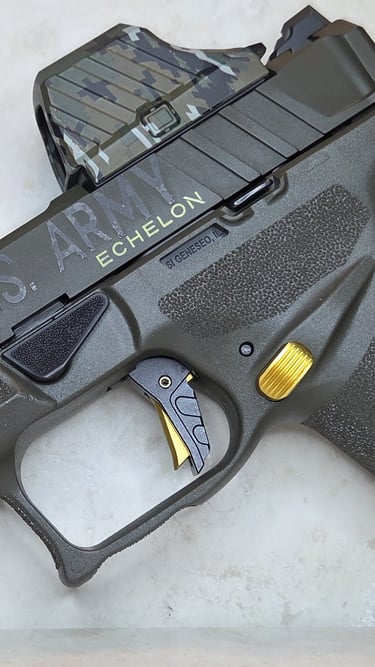
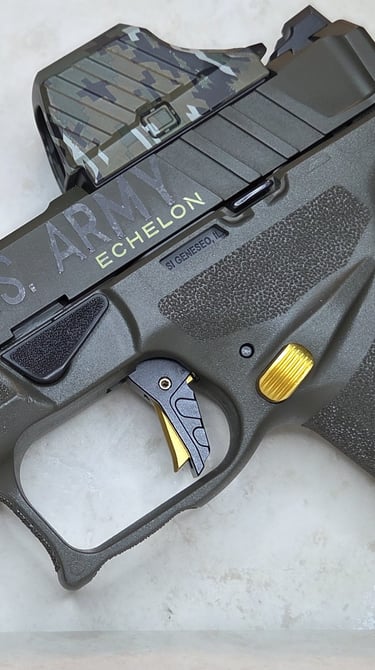
For me, the coolest part wasn't just the velocities—though seeing 1,125 FPS pop up never gets old. It was understanding why the velocity matters:
Consistency
Standard deviation
Extreme spread
Power factor
Kinetic energy
These aren't just numbers—they tell you how each ammo brand behaves.
And the last two pages of the analysis? Those were the "Wow—okay, this was worth buying the chronograph" pages. Based on AI's comparison work, I may need to rethink the brand I commonly use for plinking and competitions.
What's Next?
Data is addictive. So my next experiment will be running all five ammo types through another gun to compare the results of the same ammo, different gun.
If I'm buying a new tech toy, I'm putting it to work.
Stay tuned.
Safety Reminder
Just because we love data doesn't mean we ignore the basics:
Always keep the firearm pointed in a safe direction.
Treat all guns as though they are loaded.
Keep your finger off the trigger until you are ready to shoot.
Always be sure of your target and what's beyond it.
This test run also used the Tyrant CNC ITTS trigger (https://www.tyrantcnc.com/echelon-i-t-t-s-trigger.html). A full article on that is coming once I get more rounds through it.
The Process
I synced the Rangecraft to its app and exported each session. A session is 15 rounds of one brand of ammo.
The app spits out CSV files, and I pulled them into Excel—one tab per ammo brand. The Athlon app is geared toward rifle shooters and scope calcs, so I cleaned out the unneeded info.
Here's the Excel document I provided to AI:
Then I gave AI my primary prompt:
"Attached is an Excel document with the chronograph results for different brands of ammunition… Provide a summary and any other information, as you did in another chat."
AI asked me to pick an analysis style. I picked one… and immediately regretted not asking for all three. Live and learn.
It created a partial PowerPoint, so I pulled the missing pieces from the prompt output and added them to new slides. I aligned text, reformatted tables, and cleaned up colors—because a report without good formatting is just data wearing sweatpants.
After finishing the polishing, I exported the whole thing as a PDF.
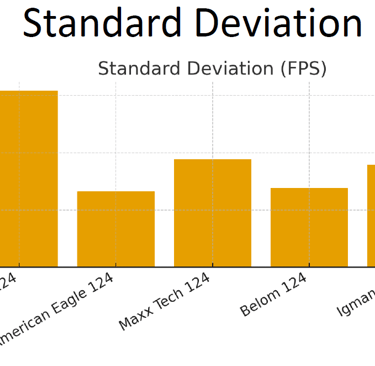
Here's a chart AI created that's in the final report.
The Results (You Be the Judge!)
Here's the final report: